

Information systems (IS) is an integrated set of components used for gathering, processing, storing and communicating multiple types of information for improved societal and organizational efficiency.
Information system components cover academic and professional disciplines spanning the fields of business and computer science. Typical information systems include data about people, software, hardware and procedures. Collected digital data is used for study and analysis.
Information systems include the following interactions:Between technology and algorithmic processes within the boundaries of an enterprise Organizational interaction with technology and vice versa Between society and technology. The history of information systems predates the emergence of modern computer science in the 20th century. A number of legacy information systems still exist and are continually updated to ensure data security and longevity, promote ethnographic approaches and improve the social effectiveness and efficiency of information processing.
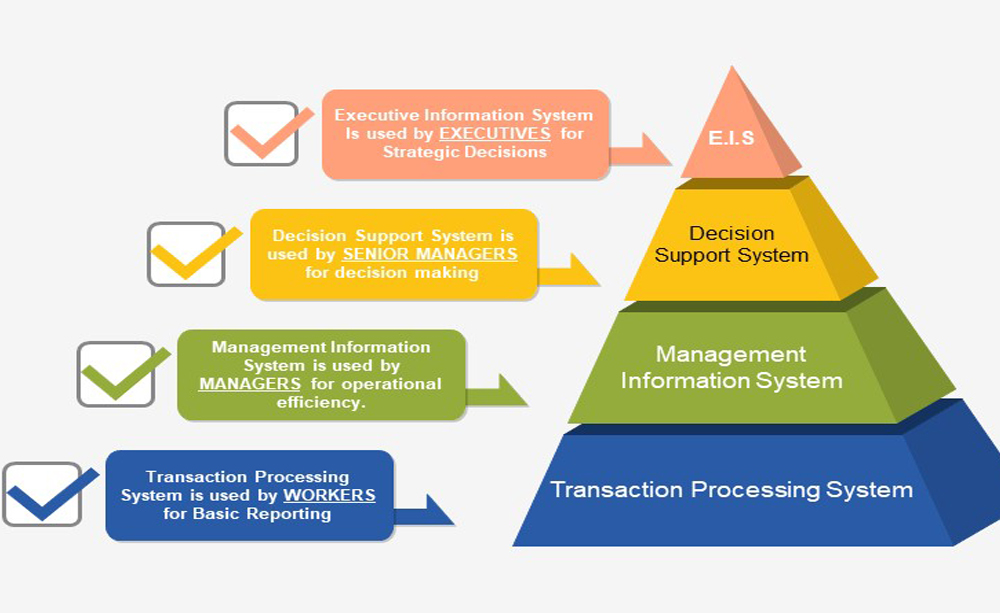
Transaction Process Systems (TPS)
Office and office automation
Enterprise Collaboration Systems (ECS)
Enterprise Resource Planning (ERP)
Expert Systems
Global Information Systems (GIS)
Management Information Systems (MIS)
Decision Support Systems (DSS)
Data Warehouses (DW)
Executive Support Systems (ESS)
Many of these systems are designed to accomplish tasks that are more advanced than most human brain capabilities, such as storing large quantities of data and executing complex calculations and simultaneous processes.